Call us now: 90613 27222
Email: info@bastaeco.com
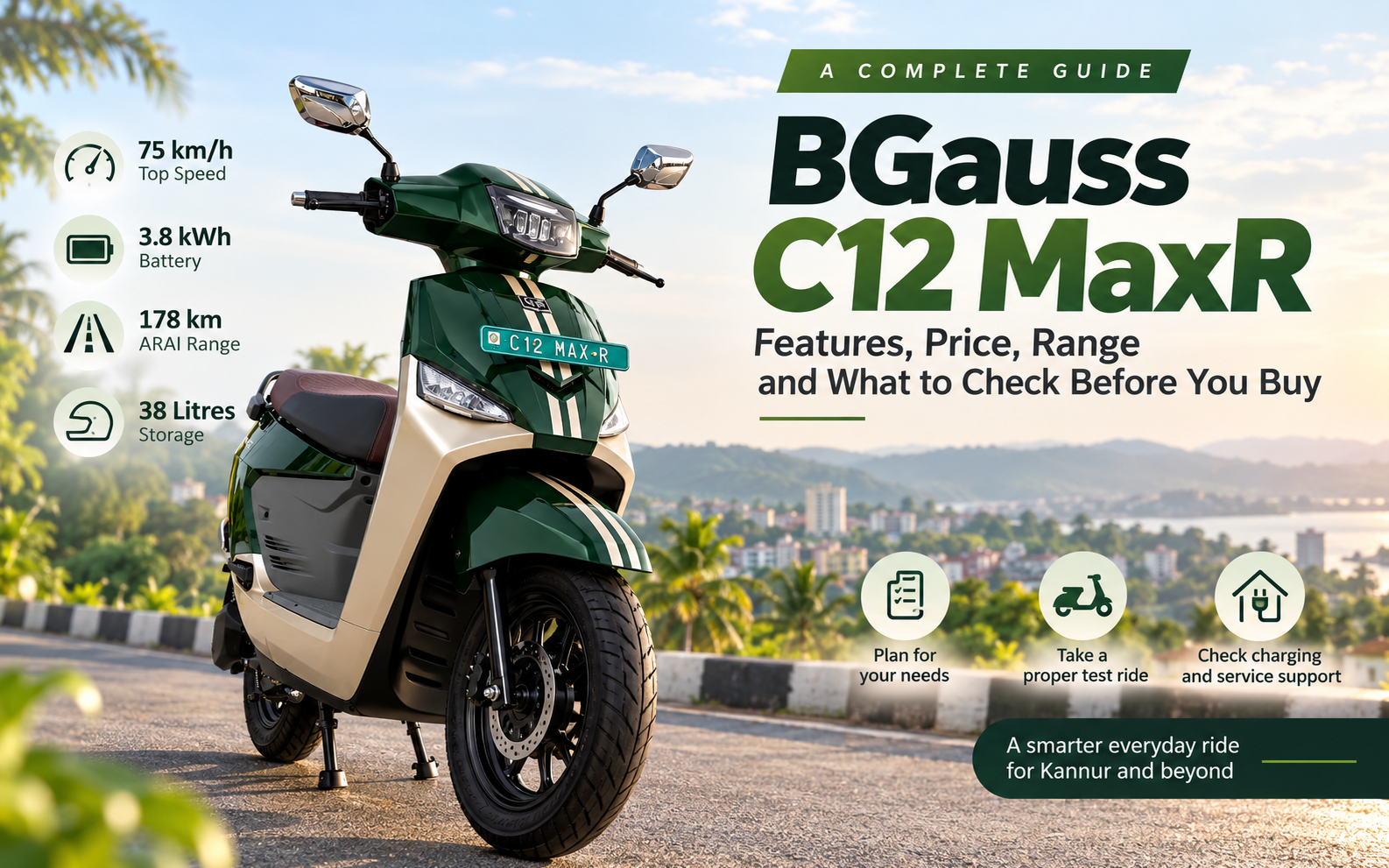
BGauss C12 MaxR: New Electric Scooter Features and a Practical Buyer Guide
The new BGauss C12 MaxR gives electric scooter buyers in Kannur another model to investigate when planning a change in their everyday transport. A product launch naturally draws attention to the biggest numbers, but a useful purchase decision goes further. Your scooter must suit the distance you actually travel, the place where you park, the people who share it, and the way you carry shopping or work equipment. This guide introduces the manufacturer-listed highlights and explains how to evaluate them against your own routine before booking.
This is a product introduction and buyer preparation guide, rather than a hands-on road test. Product information was checked on 13 September 2026. Availability, delivery schedules, local charges, and promotional terms should be confirmed when you request a quotation.
The official BGauss C12 MaxR page lists a 75 km/h maximum speed, a 3.8 kWh battery, 178 km ARAI-certified range, and 38 litres of storage. It also describes four storage locations, a five-inch TFT display, reverse mode, USB charging, a side-stand sensor, fall detection with motor cut-off, and a limp-home mode.
On the date checked, the page displayed an ex-showroom price of Rs. 1,59,990 including GST and charger, an effective figure of Rs. 1,54,990 after a displayed Rs. 5,000 PM E-Drive deduction, and a limited-time launch price of Rs. 1,45,990. These are manufacturer-advertised figures, not a confirmed local on-road quotation or verification of incentive eligibility. Ask the dealer which offer applies, whether any benefits overlap, and what the final payable amount includes.
A certified range figure provides a reference under defined test conditions. It should not become a promise that every rider will cover that distance between charges. Traffic, gradients, riding speed, passenger load, weather, tyre condition, and battery condition can affect the distance available in everyday use. The practical question is whether the scooter comfortably handles your demanding routine with a reserve, rather than whether you can reproduce a headline number.
Write down your longest normal day. Include both directions of the commute, school collection, shopping, and an occasional diversion. If that comes to 42 kilometres, use 42 as the starting point for your discussion with the dealer. Ask about expected use on a comparable route, and explain whether you usually ride alone or with a passenger. A route description is more useful than simply asking for the real range.
A quick loop around a showroom may tell you whether you like the riding position, but it cannot answer every ownership question. Request a permitted route that includes ordinary junctions, slow movement, and the types of turns you make near home. Keep the ride within traffic rules and conditions. Testing maximum speed is unnecessary for evaluating an urban commute.
Pay attention to how easily you control the scooter at walking pace, whether the throttle response feels predictable, and whether you can comfortably reach the brake levers. Stop, restart, and make a normal turn where safe. If another adult in your household will use the scooter, arrange a separate test ride for them. Shared ownership works best when every regular rider can manage the vehicle confidently.
A storage capacity expressed in litres does not tell you whether a particular helmet, lunch bag, or laptop case will fit. The shape of the opening, internal divisions, and the space required for other equipment matter. Bring your normal bag to the showroom and ask permission to check it. Close the seat gently and make sure nothing interferes with the latch or presses against sensitive items.
For a family scooter, consider a typical return journey from the shops. Where will the groceries go when a passenger is seated? Can you secure belongings without placing them near moving parts or affecting steering? Ask the dealer to identify approved carrying areas and load limits. Convenient storage should make a journey easier without encouraging an overloaded or unbalanced arrangement.
Your daily experience begins and ends in the parking space. Measure the opening of the gate and consider how the scooter will turn into position. Think about whether someone else parks behind it, whether the surface slopes, and whether you must move it manually. At the showroom, ask for a demonstration of reverse mode and learn its operating conditions before trying it yourself.
A reversing aid is useful only when the rest of the arrangement works. It does not remove the need for stable footing, sufficient clearance, and careful observation. If your parking area is cramped, show the dealer a simple sketch with measurements. Discuss the actual manoeuvre, including how you will exit in the morning when other vehicles are present.
Do not assume that a convenient-looking socket automatically provides a suitable charging location. Ask for the exact charger requirements and installation guidance for the C12 MaxR being supplied. Have a qualified electrician assess the proposed supply where needed. The charging location should follow the manufacturer instructions, with a suitable cable route and protection from conditions the equipment is not designed to tolerate.
Also ask about the charging time for the supplied charger, the charging procedure, battery access, and any restrictions that affect your home. The product introduction should not be used to infer removable-battery operation, charging speed, or compatibility with another model's accessories. If you live in a rented property or apartment, establish permission and practical access before treating home charging as a solved problem.
During the demonstration, ask the salesperson to explain the dashboard in the order you will use it: starting the scooter, checking charge, selecting the permitted riding mode, reading warnings, and switching off. Readability in the showroom is only part of the story. Check whether you can understand the essential information comfortably from your normal seated position.
Ask what happens when the side stand is down, what the fall-sensing function does, and how to respond to an alert. Treat limp-home functionality as a limited assistance feature whose conditions must be explained, not an extra distance allowance for routine planning. Safety and assistance features support attentive riding; they do not replace braking distance, judgement, maintenance, or a sensible charging reserve.
A useful quotation identifies the exact model, colour, charger, included equipment, and final on-road amount. It should separate the vehicle price from insurance, registration-related charges where applicable, accessories, and any other fees. Ask which items are optional. When discussing a displayed introductory offer, request the validity date and qualifying conditions in writing.
Compare quotations on the same basis. One may include an accessory that another lists separately, or use a different insurance option. Avoid deciding from a monthly instalment alone. If considering finance, request the total amount payable and the full repayment schedule from the provider. A clear purchase summary prevents a good product comparison from being undermined by inconsistent pricing assumptions.
Before paying a booking amount, establish where the scooter will be serviced and how appointments are arranged. Ask for the maintenance schedule, documentation requirements, and written warranty terms for the vehicle, battery, charger, and other covered components. Coverage should come from the actual documents supplied for your purchase; it should not be assumed from another BGauss model or an older advertisement.
It is also useful to discuss ordinary disruptions. Who should you contact if the scooter will not start at home? What assistance is available, and what costs might apply? How are parts ordered when a repair cannot be completed immediately? These questions make ownership more predictable without requiring the dealer to promise that problems will never occur.
At handover, match the vehicle details with the invoice and inspect the exterior, lights, display, keys, charger, and supplied accessories with the staff member. Ask for a repeat demonstration of charging and shutdown, especially if the person collecting the scooter is different from the main rider. Keep the manuals and service contact details together.
For buyers exploring BG electric scooters in Kannur, the C12 MaxR is worth assessing through a practical demonstration and a complete quotation. Contact Basta Eco to ask about current model availability and the next steps for an enquiry. Bring your daily distance, parking details, and charging questions so the conversation can focus on whether this new model suits your household.
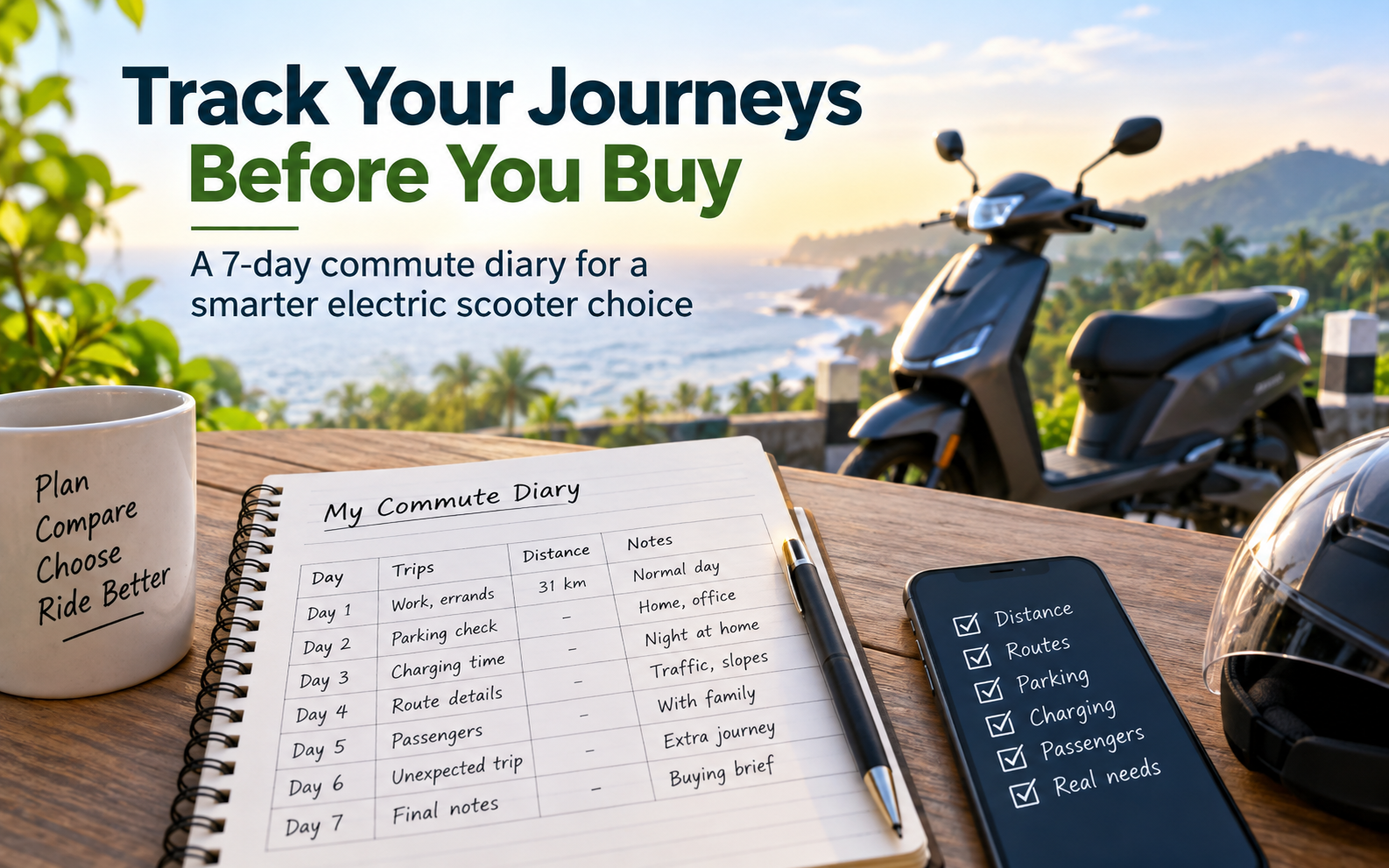
The Seven-Day Commute Diary: Prepare for Your First Electric Scooter
 September 12, 2026
September 10, 2026
September 5, 2026
September 4, 2026