Call us now: 90613 27222
Email: info@bastaeco.com
7 Proven Tips to Maximize Your Electric Scooter's Battery Life and Range
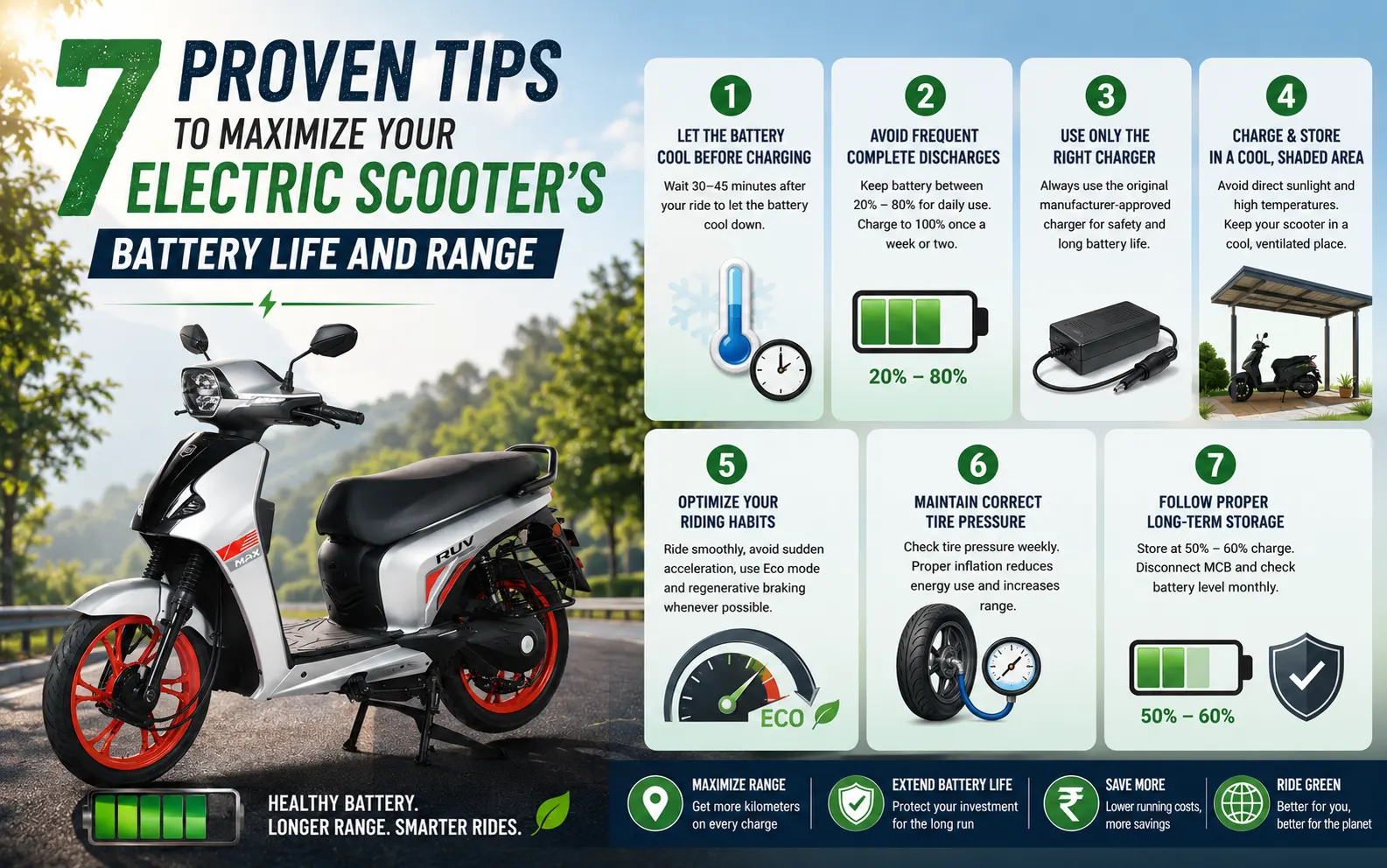
Electric scooters have taken the two-wheeler market by storm, offering an incredibly clean, quiet, and cost-effective way to travel. With petrol prices rising, upgrading to an electric two-wheeler is one of the smartest financial decisions you can make. The most critical and expensive component of your electric scooter is its battery pack. The performance, range, and overall lifespan of your vehicle depend directly on how well you maintain the battery. While high-quality scooters like the BGauss BG RUV 350 and BG Max C12 use state-of-the-art Lithium Iron Phosphate (LFP) batteries—which are exceptionally safe and durable—following best practices can help you squeeze out extra kilometers per charge and extend the battery’s overall life. In this comprehensive guide, we share 7 proven battery maintenance tips to help you maximize your electric scooter’s range and keep it running like new for years.
One of the most common mistakes electric scooter owners make is plugging in their vehicle immediately after a ride. During operation, especially when climbing hills or riding in Sport mode, the battery pack and electric motor generate internal heat. If you connect the charger while the battery is still hot, you place additional thermal stress on the cells, which can accelerate degradation over time. This is particularly important in Kerala’s warm, humid tropical climate where passive cooling takes longer.
The Best Practice:
After parking your scooter, wait for at least 30 to 45 minutes before plugging in the charger. This allows the battery cells to cool down to ambient room temperature. Charging a cool battery ensures that the internal chemical reactions occur smoothly and efficiently, protecting the battery's health and preserving its long-term capacity. It also ensures that the charger does not run at high temperatures, increasing the safety of your home charging setup.
Unlike older battery technologies (such as Nickel-Cadmium) that suffered from a "memory effect" and needed to be fully discharged regularly, modern Lithium-based batteries perform best with shallow discharge cycles. Letting your electric scooter's battery drop to 0% places immense strain on the cells, which can reduce their capacity and lifespan if done frequently. Deep discharge cycles can also stress the Battery Management System (BMS), causing it to shut down temporarily to protect the cells.
The Best Practice:
Try to keep your battery level between 20% and 80% for daily usage. Plug in your scooter when the battery level drops to around 20% rather than waiting for the low-battery warning to flash. However, for LFP batteries (like those in BGauss scooters), it is recommended to charge the battery to 100% once a week or once every two weeks. This full charge helps the BMS calibrate itself, ensuring the dashboard displays accurate range and battery percentages. LFP chemistry benefits from this periodic top-up to balance the voltages of individual cells in the pack.
It can be tempting to buy a cheap, third-party charger or use a friend's fast charger to juice up your scooter quickly. However, this is one of the leading causes of battery failures and safety hazards. Every electric scooter battery pack is designed to accept a specific input voltage and current. Third-party chargers may not have the necessary safety features, such as over-voltage protection, auto-cut-off, or thermal sensors. They might supply unstable current, which degrades the battery chemistry rapidly.
The Best Practice:
Always use the original charger supplied by the manufacturer (e.g., BGauss). These chargers are specifically calibrated to communicate with your scooter's BMS, adjusting the charging rate dynamically to prevent overheating and overcharging. The charger and BMS work together as an intelligent team to protect the cells. If your original charger is damaged, contact your local dealer, such as Basta Eco Products in Kannur, to purchase a genuine replacement rather than buying unverified chargers online.
Extreme temperatures are the natural enemy of electric vehicle batteries. High heat accelerates the chemical degradation inside the cells, while extreme cold slows down the movement of ions, temporarily reducing range. In a tropical climate like Kerala's, protecting your scooter from direct sunlight is crucial. When a scooter is parked under the hot sun, the temperature inside the battery compartment can rise significantly higher than the ambient temperature.
The Best Practice:
Whenever possible, park and charge your scooter in a shaded garage, carport, or basement. Avoid leaving the scooter parked under direct sunlight during the hottest part of the afternoon. If you must park outdoors, use a reflective cover to shield the battery compartment from direct heat. Storing the vehicle in a cool, ventilated area prevents heat build-up, preserving both the battery pack and the delicate electronic controllers. It also prevents the tires and body panels from premature weathering.
The range displayed on your digital dashboard is an estimate based on average driving conditions. Just like fuel economy in a petrol car, your EV's range is heavily influenced by how you ride. Aggressive acceleration, high speeds, and constant braking consume energy rapidly, draining the battery faster. Carrying unnecessary cargo also increases the load on the motor, drawing more power.
The Best Practice:
Adopt smooth, progressive throttle inputs. Avoid twisting the throttle to its maximum limit instantly. Utilize the scooter's riding modes: use Eco or Ride Mode when navigating heavy traffic or cruising through towns like Kannur, and save Sport Mode for overtaking. Additionally, make use of regenerative braking (if equipped). Regenerative braking converts kinetic energy during deceleration back into electrical energy, feeding it back into the battery and extending your range by up to 5-10%. It also reduces wear on your brake pads.
Tire pressure has a direct impact on the energy efficiency of any vehicle. Under-inflated tires increase the contact area between the rubber and the road, creating higher rolling resistance. This means the electric motor has to work harder and draw more current from the battery to maintain speed, resulting in a significant drop in range. It can also lead to poor handling and increased risk of punctures.
The Best Practice:
Check your scooter's tire pressure at least once a week using a reliable pressure gauge. Maintain the pressure within the manufacturer-recommended PSI range (typically printed on the tire sidewall or the user manual). Keeping your tires properly inflated reduces rolling resistance, increases your range, improves handling, and extends the life of your tires. For electric scooters, even a 3-4 PSI drop below the recommended limit can result in a 5% loss in range.
If you plan to travel or will not be using your electric scooter for an extended period (such as several weeks or months), do not leave the battery fully charged or completely empty. Storing a battery at 100% for a long time places stress on the cells, while storing it at 0% can cause the battery to discharge naturally below a critical threshold, rendering it unusable. This deep self-discharge can cause permanent chemical damage to the cells, preventing them from accepting a charge in the future.
The Best Practice:
Before storing the scooter, charge or discharge the battery to around 50% to 60%. Turn off the main circuit breaker (MCB) under the seat (if available) or disconnect the battery to prevent standby power draw from smart features like GPS or anti-theft systems. Store the scooter in a dry, cool place away from moisture. Check the battery level once a month and top it up back to 50-60% if it drops significantly. This simple routine preserves the health of the cells during inactive periods.
Your electric scooter is a valuable investment in sustainable mobility. By following these simple, proven maintenance tips—such as letting the battery cool before charging, keeping charge levels in the sweet spot, using genuine chargers, maintaining tire pressure, and practicing proper long-term storage—you can protect your battery's health, maximize your daily range, and enjoy a reliable, cost-effective ride for years.
Are you looking to upgrade to a premium, long-lasting electric two-wheeler? Explore our high-performance models on our BGauss BG RUV 350 Page or browse our complete collection in our Electric Scooters Section. For battery checkups, servicing, or expert advice, visit Basta Eco Products in Pallikkunnu, Kannur, today!